- Tech Stock Insider
- Posts
- This Doctor App Got Sent To The Emergency Room, But The Business Still Has A Pulse
This Doctor App Got Sent To The Emergency Room, But The Business Still Has A Pulse

Noah Zelvis
April 05, 2026
This one has been dragged so hard you would think somebody unplugged the hospital Wi-Fi.
The stock is sitting at a 52-week low, pharma budgets got weird, and investors are acting like the whole story caught a bad case of post-pandemic fatigue. But under the hood, the business still looks a lot healthier than the chart.
Margins are fat, cash is real, buybacks are active, and AI may be giving it a fresh reason to matter.

A New Opening (Sponsored)

While President Trump officially earns $400,000 per year, records show he’s collected up to $250,000 per month from another source.
Until recently, most Americans had no access to this type of investment.
But a new shift — tied to Executive Order 14330 — has started to open the door.
Now, investors interested in early-stage and disruptive opportunities are taking a closer look.
See How to Access It
What Just Happened
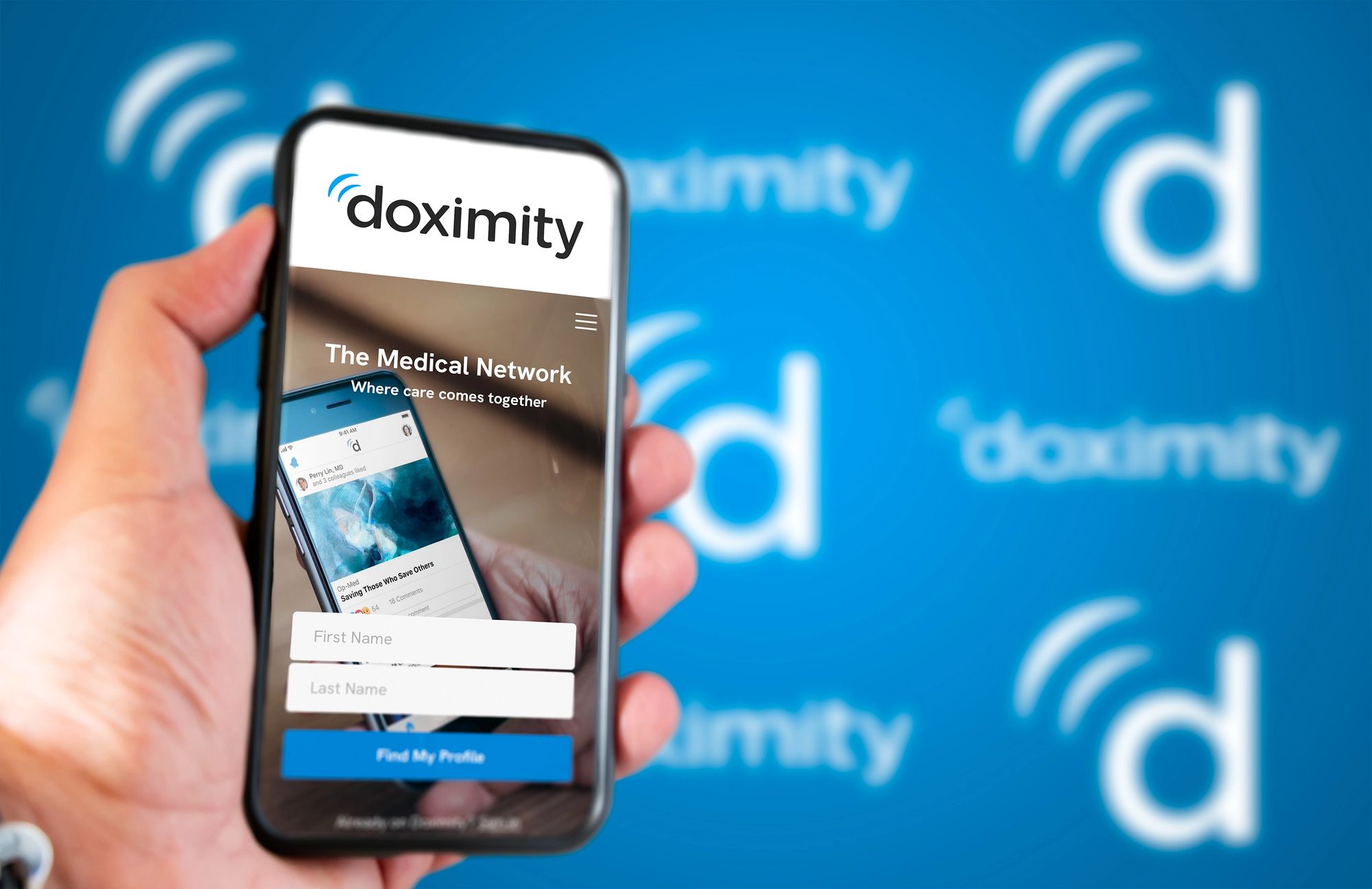
Doximity (NYSE: DOCS) has been getting treated like a patient in triage. The stock hit a new 52-week low around $23.53 in late March, down roughly 69% from its 52-week high. At the same time, several analysts have argued the selloff may be overdone. Freedom Capital started coverage with a Buy and a $31 target, Piper kept an Overweight and moved its target to $42, while Canaccord upgraded the stock to Buy even as it cut its target to $34.
The immediate reason sentiment cracked was the company’s fiscal Q4 FY2026 guidance. Doximity guided revenue to $143 million to $144 million, which implied just 4% growth and came in below what Wall Street wanted. Management tied that weakness to delayed pharma budget commitments after late-December policy uncertainty around MFN agreements. That soft guide helped trigger the stock’s ugly reset.
Never Miss Our Top Tech Recommendations Again!
We now send our tech picks via text, too, so you’ll get the same tech breakout news without having to open your inbox.
The Unsexy Product That Makes The Story Better
The lazy description is that this is LinkedIn for doctors. The better description is that it is a digital workflow and marketing platform sitting in the middle of physician communication, telehealth, recruiting, and pharma outreach.
That matters because the value here is not just “doctors hang out on the app.” It is that a very large share of U.S. physicians use the platform, which gives the company a hard-to-replicate audience for recruiting, telehealth tools, and pharma marketing. The more the platform becomes part of everyday physician workflow, the less it looks like a novelty and the more it looks like infrastructure.
The AI layer is what makes the story newly interesting. The company’s DocsGPT rollout crossed 300,000 unique prescriber users in its first full quarter after the Pathway acquisition, and more than 100 health systems covering 180,000 clinicians had cleared internal committees and bought the full AI suite. That gives Doximity a shot at opening new budgets rather than just defending the old ad business.
Financial Planning (Sponsored)

Capital gains taxes may quietly reduce more of your investment returns than you realize.
But the tax code includes several strategies that may help reduce that bill.
Three often-overlooked areas include investment-related expenses, cost basis adjustments, and real estate selling costs.
When structured correctly, these deductions may help minimize taxable gains.
Because the rules can be complex, many investors work with fiduciary financial advisors to plan tax-efficient strategies.
Use SmartAsset’s free tool to find vetted financial advisors serving your area.
*This is not an offer to buy or sell any security or interest. All investing involves risk, including loss of principal. Working with an adviser may come with potential downsides such as payment of fees (which will reduce returns). Past performance is not a guarantee of future results. There are no guarantees that working with an adviser will yield positive returns. The existence of a fiduciary duty does not prevent the rise of potential conflicts of interest.
*SmartAsset.com is not intended to provide legal advice, tax advice, accounting advice or financial advice (Other than referring users to third party advisers registered or chartered as fiduciaries ("Adviser(s)") with a regulatory body in the United States). The article and opinions in this publication are for general information only and are not intended to provide specific advice or recommendations for any individual. We suggest that you consult your accountant, tax, or legal advisor with regard to your individual situation.
*SmartAsset Advisors, LLC ("SmartAsset"), a wholly owned subsidiary of Financial Insight Technology, is registered with the U.S. Securities and Exchange Commission as an investment adviser. SmartAsset's services are limited to referring users to third party advisers registered or chartered as fiduciaries ("Adviser(s)") with a regulatory body in the United States that have elected to participate in our matching platform based on information gathered from users through our online questionnaire. SmartAsset receives compensation from Advisers for our services. SmartAsset does not review the ongoing performance of any Adviser, participate in the management of any user's account by an Adviser or provide advice regarding specific investments.
*We do not manage client funds or hold custody of assets, we help users connect with relevant financial advisors.
Trivia: How long did it take the Dow Jones to recover to its pre-1929 crash peak? |
Why The Market Cares Again
First, the business is still growing. In fiscal Q3 2026, revenue rose to $185.1 million, up 10% year over year, and beat the high end of guidance. That is not rocket-ship growth, but it is a lot better than the stock action suggests. Adjusted EBITDA margin was 60% in the quarter, which is the kind of number most software names would happily frame and hang on the wall.
Second, the company is still a cash machine. It generated $216.9 million in operating cash flow in the first nine months of fiscal 2026 and ended the period with $64.8 million in cash plus $670.3 million in marketable securities. It also spent $342.9 million on share repurchases in those first nine months. This is not a balance-sheet stress story.
Third, buybacks are suddenly a major part of the pitch. On February 5, the board authorized a new $500 million repurchase program with no expiration date. At today’s stock price, that is not cosmetic. It is real support.
Anthem Gold (Sponsored)

For decades, the advice was simple: stay invested, ride out volatility, and think long term.
But today, many retirement portfolios still rely on the same assets—stocks, bonds, and dollar-based funds.
Different labels, same system. When it shakes, your retirement shakes too.
Some investors are turning to physical gold and silver in a Gold IRA.
It allows you to diversify a portion of your retirement outside traditional markets.
A free guide explains how it works, how assets are protected, and what to consider before making a move.
Access the guide here.
*Anthem Gold Group strives to offer accurate, valuable information and helpful insights to its audience. However, we cannot guarantee the completeness, accuracy, timeliness, or usefulness of all content provided. Any advice shared by Anthem Gold reflects our opinions and should not be solely relied upon for decision-making. We encourage you to seek independent legal, financial, tax, and investment advice before opening an account with Anthem Gold. All decisions regarding the purchase or sale of precious metals are solely your responsibility.
What The Financials Are Signaling
The most important signal is that the core model still has very strong economics. Full-year FY2026 guidance sits at $642.5 million to $643.5 million in revenue, with $355.5 million to $356.5 million in adjusted EBITDA. Gross margins remain above 90%, and trailing net revenue retention was 112% across its 126 largest customers.
That is the heart of the bull case. This company is not cheap because it is broken. It is cheap because the market hates the near-term pharma budget wobble and does not want to give full credit yet to AI products that are getting used but not really monetized inside guidance.
The Valuation Problem No One Should Ignore
This one is weird because the valuation now looks a lot less demanding than the old DOCS version investors remember.
The market has compressed the forward P/E to around 16x, down sharply from much richer levels seen last year. Meanwhile, the consensus 12-month target sits around $46.63, according to a recent analyst roundup. That gap is why so many analysts are leaning bullish after the collapse.
Of course, low multiples can stay low if growth wobbles enough. The market is basically saying: prove the pharma delays are temporary, prove AI becomes real revenue, and then maybe we can talk about giving you a higher multiple again.
What Needs To Happen Next
The first thing to watch is pharma budget normalization. Management said January 2026 bookings growth was the highest since IPO, helped by delayed December signings from 16 of the top 20 pharma companies. If that momentum keeps rolling into the mid-year upsell season, the whole narrative can improve fast.
The second thing to watch is AI monetization. DocsGPT and the broader AI suite are getting adoption. Now investors need to see whether that usage turns into a line item people actually pay for in a meaningful way. The company has the engagement. The open question is how quickly that becomes revenue.
The third thing is execution risk around finance leadership. The CFO’s medical leave created interim leadership, which is not ideal during a period when the company is trying to explain budget delays, AI investments, and buyback math all at once. That does not kill the story, but it does add a little extra wobble.
The Risks You Should Take Seriously
The obvious risk is that pharma budgets stay sluggish longer than expected. If those delays drag into another major selling season, the revenue rebound takes longer and the stock stays cheap for a reason.
The second risk is that AI becomes a great demo but a slower business. Strong usage is nice. Real monetization is nicer. If that takes longer than expected, the stock may stay stuck in show-me mode.
The third risk is that this turns into a margin debate. Right now the company has elite margins, but increased AI infrastructure spend and product investment can weigh on that if the revenue side does not catch up quickly enough.
How I’d Frame A Position
I would treat this like a high-margin platform story that got hit with a near-term budget hangover.
If you already own it, the main question is whether you believe the pharma slowdown is timing-related rather than structural. If you are new, this looks more like a scale-in candidate than a hero trade. The valuation is much more reasonable now, the buyback is meaningful, and the business quality still looks strong. The catch is that you probably need a little patience and a tolerance for headline noise.
Bottom Line
Doximity looks like a stock the market shoved into a hospital gown and forgot in the hallway. But the business itself still has a lot going for it: strong margins, real cash flow, aggressive buybacks, and a meaningful AI adoption story that has not yet shown up in guidance.
The stock may deserve some skepticism after the weak Q4 guide. It probably does not deserve to be treated like the platform stopped mattering. If pharma spending normalizes and AI starts turning usage into dollars, this thing could look a lot less sick than the chart makes it seem.
Action Recap
✅ What’s working: elite margins, solid cash generation, a large buyback, and real AI adoption.
✅ What to watch: pharma budget recovery, AI monetization, and whether FY2026 guidance holds up.
⚠️ Big risk: budget delays last longer and keep growth stuck in the waiting room.
🧭 Best mindset: high-quality digital-health platform at a reset price, but it still needs a cleaner bill of health.
That's our coverage for today; thanks for reading! Reply to this email with feedback or any tech stocks you want me to check out.
Best Regards,
—Noah Zelvis
Tech Stock Insider