- Tech Stock Insider
- Posts
- The Website Builder That Quietly Wins When Everyone Decides They Need a Brand
The Website Builder That Quietly Wins When Everyone Decides They Need a Brand

Noah Zelvis
February 03, 2026
There is a certain moment every business hits. Maybe sales slow down. Maybe a competitor shows up on Instagram looking suspiciously polished.
Maybe someone Googles them and finds a 2017 Facebook page and vibes. Suddenly, building a real website becomes urgent, not optional.

Early Signal (Sponsored)

One overlooked stock may be on the verge of a major breakout—and Wall Street is finally starting to take notice.
Analysts have just upgraded the stock and raised expectations as it positions itself in a fast-growing multi-billion-dollar market.
A respected market veteran recently called it his top pick for the year ahead, and more investors are beginning to catch on.
If you missed the last major tech surge, this could be your second chance to get in early.
[Click Here to Access the Free Report]
*This ad is sent on behalf of Chaikin Analytics, 201 King Of Prussia Rd., Suite 650, Radnor, PA 19087. If you would like to optout from receiving offers from Chaikin Analytics please click here.
Never Miss Our Top Tech Recommendations Again!
We now send our tech picks via text, too, so you’ll get the same tech breakout news without having to open your inbox.
Digital Media
Adobe Pulls The Plug On Animate As AI Takes Center Stage
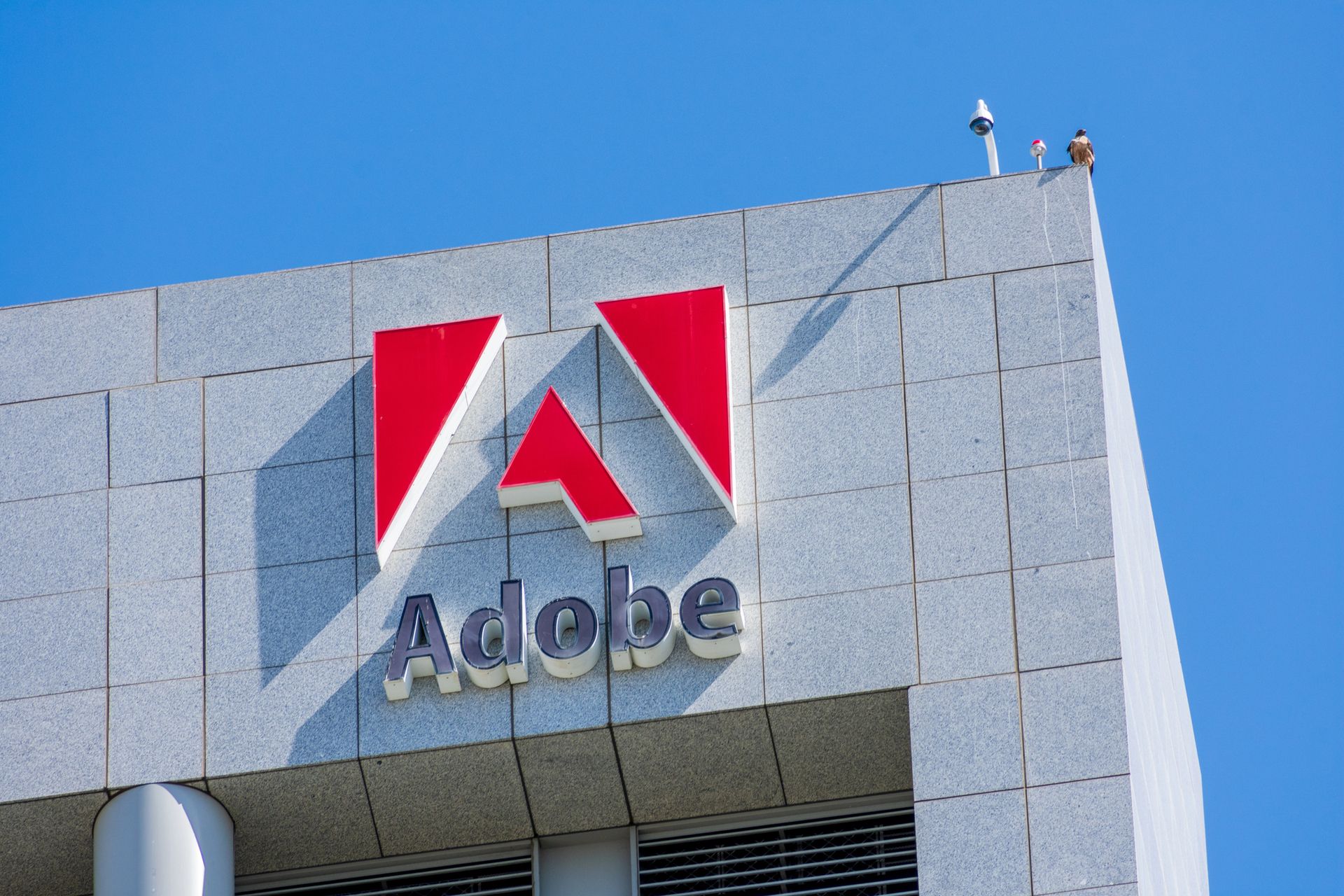
Adobe (NASDAQ: ADBE) is officially shutting down Adobe Animate, ending a 25-year run for one of the most recognizable tools in 2D animation.
The software will be discontinued in March 2026, with extended enterprise support offered to larger customers during a multi-year wind-down.
Animate powered everything from web cartoons to indie games and classroom curriculums.
Its exit signals a clear shift in Adobe’s priorities away from traditional timeline-based animation tools and toward AI-driven creative workflows.
AI Becomes The New Creative Gravity
The move reflects Adobe’s accelerating focus on AI-first products across Creative Cloud.
Instead of maintaining a standalone animation engine, Adobe is betting that generative tools, automation, and smart effects embedded across apps like After Effects, Express, and Firefly will cover most creative needs.
From Adobe’s perspective, animation is no longer a single product category.
It is becoming a feature set distributed across tools and increasingly driven by AI-assisted motion, compositing, and content generation.
What This Means For Adobe’s Platform Strategy
Technically, this is Adobe consolidating engineering effort. Maintaining legacy rendering pipelines and animation runtimes is expensive.
Redirecting that talent toward AI models and cross-app intelligence tightens Adobe’s control over the future creative stack.
Strategically, Adobe is signaling that the future of creativity on its platform will be faster, more automated, and increasingly AI-mediated, even if that means sunsetting tools that built its original creative community.
Fintech
PayPal Expands Beyond The Button With Chat And Crypto

PayPal (NASDAQ: PYPL) is pushing its payment rails far beyond the traditional checkout page.
Through a new partnership with Authvia, PayPal is enabling merchants to accept payments directly inside SMS and rich communication services.
Instead of clicking through links or apps, customers can now complete purchases inside the same text thread where the conversation started.
This move embeds PayPal into everyday interactions like customer support, billing reminders, and service follow-ups, areas where payment intent already exists, but checkout friction often kills conversions.
AI Assistants Get A Wallet
At the same time, PayPal is integrating with OpenAI to power AI-driven commerce inside ChatGPT.
The goal is to let users discover products, get recommendations, and complete transactions without leaving the chat interface.
This also extends to merchant tools, giving businesses a way to accept payments directly within AI-powered conversations rather than redirecting users elsewhere.
Crypto Moves From Experiment To Utility
PayPal is also integrating crypto more deeply into its commerce stack.
With expanded “Pay with Crypto” options and continued support for its PYUSD stablecoin, PayPal is testing whether digital assets can work as everyday payment tools rather than speculative add-ons.
Taken together, these moves show PayPal shifting its focus from competing head-on at the checkout button to embedding payments where decisions actually happen.
Whether that is a text message, an AI assistant, or a crypto wallet, PayPal is betting that the next wave of payments starts with conversation, not a cart.
AI Rotation (Sponsored)

If you own ZERO of the Next Magnificent Seven stocks.
Original Mag Seven turned $7,000 into $1.18 million.
But these seven AI stocks could do it in 6 years (not 20).
Now, the man who called Nvidia in 2005 is revealing details on all seven for FREE.
Find Out More Now Before It's Too Late.
Robotics
Cyngn Moves Autonomous Vehicles Into The Digital Warehouse

Cyngn (NASDAQ: CYN) is taking a major step in how industrial autonomous vehicles are built, tested, and deployed.
The company has developed a full simulation environment using NVIDIA’s Isaac Sim framework that mirrors real warehouse and factory operations.
Instead of relying solely on physical testing, Cyngn can now validate its autonomy and fleet software inside a high-fidelity digital replica of customer facilities.
This setup runs Cyngn’s entire technology stack as if vehicles were already operating on site, allowing the company to simulate larger fleets, tighter workflows, and more complex edge cases without disrupting live operations.
From Slow Testing To Fast Iteration
Simulation dramatically changes the pace of development. Cyngn can now stress-test autonomy logic, fleet coordination, and safety behavior across countless scenarios before vehicles ever touch the floor.
The environment is also being used for customer demos and training, giving operators a clear view of how autonomous tuggers and forklifts behave before rollout.
Feeding The Simulation Engine
Cyngn is not just consuming NVIDIA’s tools; it is contributing back.
The company is adding an industrial vehicle dynamics model to Isaac Sim, improving simulation accuracy for heavy material-handling vehicles like tuggers and forklifts.
Together, simulation, real-world deployments, and IP depth position Cyngn to scale autonomous industrial fleets faster and with less friction.
Trivia: Which is the term for paying for insurance yourself after leaving a job (U.S.)? |
Recent Tech Movers
GitLab (NASDAQ: GTLB)
The Dev Tool That Gets More Valuable When Teams Get Smaller
GitLab is built for the era of do more with less. When companies trim headcount, the work does not disappear. It just needs to move faster with fewer people touching it.
That is where an all-in-one DevOps platform starts to look less like a luxury and more like oxygen.
The pitch is simple: stop stitching together twelve tools and one guy named Evan who knows how the pipeline works. Consolidate, automate, ship.
If software teams keep leaning into AI-assisted coding, GitLab can benefit twice, more code shipped and more need to manage the workflow cleanly.
The risk is budget scrutiny. But if you are forced to pick tools that actually save time, this is one of the first ones to argue its case without sweating.
monday.com (NASDAQ: MNDY)
Productivity Software That Turns Chaos Into a Board With Colors
monday.com lives in the land of modern work where everything is a project, nobody has time, and your boss wants a dashboard by 3 pm.
It is part task manager, part lightweight operating system for teams, and it wins when organizations need structure without a six-month implementation.
The key here is stickiness. Once a team builds workflows into it, the switching cost becomes emotional, not just technical.
That matters in a market where every SaaS tool is fighting to avoid becoming the line item that gets deleted.
If IT tries to cut tools, monday.com can survive because teams are actually using it daily, and nobody wants to go back to spreadsheet purgatory.
ZoomInfo (NASDAQ: ZI)
The Sales Data Stock That Improves When Sellers Stop Guessing
ZoomInfo is basically the answer to a painful question: Who do we contact, what do they do, and how do we reach them without playing detective for two hours?
In good times, it helps sales teams scale. In tighter times, it helps them be precise.
That is the bull case and the problem.
When budgets tighten, sales ops tools get questioned. But when companies still need revenue, cutting the tools that help reps find buyers can backfire fast.
ZoomInfo’s moment is when management gets serious about efficiency and says fewer leads, better leads.
If that happens, demand gen and outbound teams tend to crawl right back to databases like this one, because vibes are not a go-to-market strategy.
Early Positioning (Sponsored)

Economic confidence weakens when debt rises, wars expand, and currencies lose trust.
Many investors stay frozen while purchasing power quietly slips away.
History favors those who move early when political shifts change the landscape.
This Patriot’s Tax Shield outlines how tangible gold can serve as a defensive asset in uncertain times.
A free Wealth Protection Guide explains why Trump’s return could reshape demand for gold.
Click here to download the FREE Wealth Protection Guide now.
Websites Are The New Oil
Wix (NASDAQ: WIX)
Why This Name Is Working
Wix looks like a website builder on the surface, but it is really an internet business-in-a-box. The customer is not a Silicon Valley engineer.
It is a dentist, a personal trainer, a wedding photographer, a restaurant, a creator who finally decides to sell something, or a small brand that realizes social media is not a real home base.
The best part of this model is that it is boring in a good way. People pay monthly. They add features. They buy upgrades.
And once their site is live, most of them do not want to rip it out and start over unless something truly breaks. That is recurring revenue with a psychological moat.
Now add the current tailwind: AI is making it easier for normal people to build decent sites fast. That sounds like it would commoditize the category.
But it can also expand the market, because the easier it gets, the more people try. More attempts means more subscriptions.
Wix does not need every customer to become a Shopify-sized success story. It just needs enough people to keep paying for their little corner of the internet.
Scorecard You Can Use
Recurring revenue behavior: Small businesses may be chaotic, but subscriptions are sticky once the site is live.
Platform expansion: It is not just a homepage. It is payments, bookings, email, and commerce add-ons.
AI as a funnel: Faster creation lowers friction and pulls more people into the ecosystem.
Why the Tape Cares
The creator economy keeps professionalizing: More people try to sell services and products directly, and they need a real site.
Social platforms feel unstable: Algorithm changes make businesses want an owned channel, not rented attention.
AI speeds up launching: People go from idea to website faster, and that creates more paying customers.
What Could Spook It
Small business churn: If the economy gets ugly, some customers cancel, especially at the low end.
Competition is everywhere: Squarespace, Shopify, WordPress ecosystems, and a million AI site toys.
ARPU pressure: If customers stay on cheaper tiers, growth can look less exciting.
What to Watch Next
Net retention and upgrades: Are customers adding commerce, bookings, and marketing tools, or just staying basic?
AI-driven conversion: If AI features increase trials-to-paid, that is real leverage.
SMB demand signals: Anything that hints at small business health matters.
Actionable Take
Builders: Treat this like a steady compounder in the digital small business stack. Add on dips, size it so you can ignore the noise.
Traders: Respect the fact that SMB-exposed names can swing on macro mood. If it rips, take partials. If it dumps, wait for stabilization.
Bottom line: If more people keep deciding they need a real website and a way to get paid online, Wix remains one of the cleanest picks for that trend.
Everything Else
🪙 Senators are sounding oddly upbeat that crypto rules might finally crawl out of the Senate Agriculture committee, which is not usually where fun goes to live.
🏗️ Databricks just grabbed fresh debt ahead of an IPO, basically doing a financial warm-up lap before stepping onto the public market treadmill.
🧢 A new rumor cycle has crypto Twitter doing cartwheels over the idea of a pardon for Binance’s founder, because nothing says stability like “maybe the plot twist is bullish.”
🔍 The UK is taking a closer look at whether Meta is playing nice with WhatsApp requests, aka the regulatory version of “show your work.”
🏭 Pegatron says its U.S. plant should be done by end of March, which is great news for anyone tracking the slow-motion saga of supply chain reshoring one concrete pour at a time.
That's our coverage for today; thanks for reading! Reply to this email with feedback or any tech stocks you want me to check out.
Best Regards,
—Noah Zelvis
Tech Stock Insider