- Tech Stock Insider
- Posts
- The Rack-and-Wrench Tech Stock Riding the AI Buildout
The Rack-and-Wrench Tech Stock Riding the AI Buildout

Noah Zelvis
January 23, 2026
AI is not just a software story or a GPU flex. It is construction. Real-world, deadline-driven, somebody-has-to-bolt-this-together construction.
Data centers are scaling, networks are getting denser, power and cooling are becoming the plot, and every cloud player is trying to stand up more capacity without melting the neighborhood.

Short Cycle (Sponsored)

If you own ZERO of the Next Magnificent Seven stocks.
Original Mag Seven turned $7,000 into $1.18 million.
But these seven AI stocks could do it in 6 years (not 20).
Now, the man who called Nvidia in 2005 is revealing details on all seven for FREE.
Find Out More Now Before It's Too Late.
Never Miss Our Top Tech Recommendations Again!
We now send our tech picks via text, too, so you’ll get the same tech breakout news without having to open your inbox.
Music Streaming
Spotify Turns Playlists Into Conversations

Spotify (NYSE: SPOT) is rolling out Prompted Playlists in the U.S. and Canada, letting Premium users create playlists by describing what they want to hear in natural language.
Instead of choosing genres or moods from menus, users can explain a vibe, a discovery goal, or even a creative challenge, and the AI builds the playlist from scratch.
This marks a shift away from rigid curation tools toward conversational creation. Spotify is positioning playlists as something you talk into existence rather than assemble track by track.
Discovery Gets Smarter And Less Predictable
Under the hood, Prompted Playlists analyze long-term listening history alongside live signals like charts, trends, and cultural momentum.
Users can lean into personalization or explicitly tell the AI to ignore their past behavior and explore unfamiliar territory.
That flexibility matters. It gives Spotify a way to fight algorithm fatigue, when recommendations start to feel repetitive and overly safe.
Why This Matters For Spotify’s Platform Strategy
Prompted Playlists deepen engagement without adding friction using AI to replace effort, not taste.
The feature also opens the door to prompt-driven music sharing, where the idea behind a playlist becomes as social as the songs themselves.
For Spotify, this is less about novelty and more about retention. The more expressive the interface becomes, the harder it is for users to leave.
Electric Vehicles
Autopilot Is Gone, Tesla Rewrites The Rules Of Driver Assistance
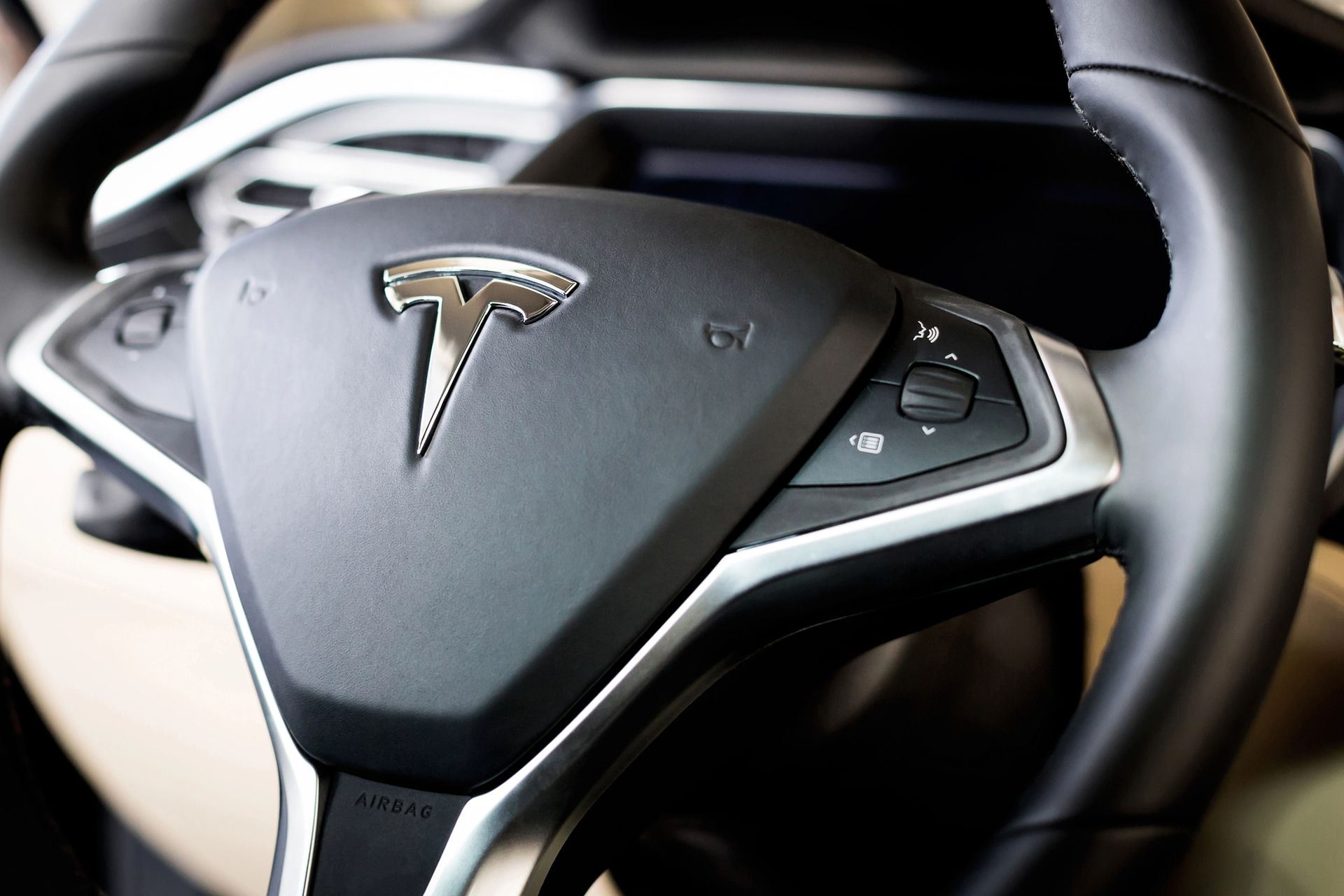
Tesla (NASDAQ: TSLA) has discontinued Autopilot as a bundled driver-assistance system, removing a name that helped shape its early autonomy narrative.
New vehicles now ship with only Traffic Aware Cruise Control, eliminating lane centering and steering assist from the default experience.
This change collapses Tesla’s software ladder into a clearer structure.
Basic cruise control sits at the bottom, while everything that resembles automation now lives exclusively inside Full Self Driving Supervised.
One Stack, One Message, Fewer Legal Headaches
From a technical perspective, this simplifies Tesla’s autonomy roadmap.
Engineers no longer need to maintain parallel feature sets that behave similarly but carry different expectations. All meaningful autonomy development now funnels into a single neural network stack.
It also reduces branding risk. Autopilot blurred the line between assistance and autonomy.
Removing it tightens Tesla’s messaging around what the system does and does not do.
Subscriptions Power The Data Flywheel
Tesla is pairing this move with a subscription-only model for FSD, turning autonomy into recurring software revenue.
More importantly, each subscriber feeds real-world driving data back into Tesla’s training pipeline.
That data advantage compounds. Fewer products, more users on one system, faster learning loops. This is Tesla choosing scale over confusion.
Hidden Cost (Sponsored)

The world is rapidly shifting to cashless systems, with countries like China leading the way.
As the U.S. rolls out FEDNOW, it’s clear that convenience could come at a steep price—your freedom.
With digital currencies, those who control the ledger control your ability to speak, transact, and live freely.
Stay informed and safeguard your future.
Download our guide on CBDCs and protect your wealth.
CLICK HERE TO GET YOUR GUIDE NOW
Artificial Intelligence
Search Gets Personal As Google Lets AI Tap Your Digital Life

Alphabet's Google (NASDAQ: GOOGL) is upgrading AI Mode by letting it pull context directly from Gmail and Google Photos, turning search into a personalized control center.
Instead of relying on generic prompts, AI Mode can now infer intent from bookings, receipts, and everyday activity.
This shifts the search from reactive to proactive.
The system can surface travel plans, shopping suggestions, and lifestyle recommendations without users needing to spell everything out.
Personal Data Becomes The Interface
By connecting email and photo history, Google lets AI understand habits at a systems level rather than a query level.
Purchases, trips, and preferences become signals that shape responses in real time.
This approach reduces friction but increases dependency. The more users rely on AI Mode, the more central Google becomes to daily decision-making.
A Controlled Push Into Hyper Personal AI
The rollout is limited to Google AI Pro and Ultra subscribers and runs through Google Labs, keeping the feature gated and experimental.
That gives Google room to tune performance while avoiding a full-scale privacy backlash.
Strategically, this aligns Search with Gemini's broader push toward persistent, context-aware AI. Google is betting that relevance, not novelty, will define the next phase of consumer AI.
Poll: You’re offered stock options worth $0 today or cash now—what do you pick? |
Recent Tech Movers
GitLab (NASDAQ: GTLB)
The Dev Team Wants One Tab, Not Twelve
GitLab sits in a simple lane with a surprisingly strong pitch: do more of the software lifecycle in one place.
A DevSecOps platform is basically the idea that building, securing, and running software should not require a scavenger hunt across a dozen tools.
When budgets tighten, consolidation becomes a feature, not a compromise.
And when AI accelerates coding output, the next bottleneck is not writing code, it is shipping it safely and keeping it stable.
GitLab is not a hype machine, it is a workflow machine. If enterprises keep standardizing, this is the kind of name that can win quietly while everyone argues about which model is smarter.
Samsara (NYSE: IOT)
The Internet of Trucks, Forklifts, and Oh No That Was Expensive
Samsara is what happens when software leaves the office and starts babysitting real assets. Fleets, job sites, warehouses, field ops.
The pitch is visibility and fewer mistakes, which is corporate speak for stop lighting money on fire.
Their platform pulls in data from devices like cameras and sensors and centralizes it into dashboards, which makes it easier to run operations without relying on vibes and walkie-talkies.
If the economy stays choppy, businesses still chase efficiency.
And efficiency software tends to keep getting renewed, because it is hard to unsee waste once you finally measured it.
Duolingo (NASDAQ: DUOL)
Language Learning, Now With AI Side Quests
Duolingo is consumer tech with a sneaky enterprise-grade advantage: engagement. It has turned learning into a daily habit, and AI features are helping it add more personalized learning without hiring an army of tutors.
Things like Duolingo Max and AI-powered explanations push it toward a premium bundle story, not just a free app with ads.
The fun part is the brand, but the investor angle is retention and pricing power.
If they keep stacking new paid features without killing the vibe, this remains one of the cleaner examples of AI making a product better instead of just making a demo prettier.
100X Setup (Sponsored)

Gold makes up just 0.5% of U.S. household savings, well below its historical average of 2%.
If demand simply returns to normal levels, we could see a 4X surge in gold buying.
Add to that central banks buying gold at record pace, a gold mining renaissance in America, and Warren Buffett potentially revealing a massive stake, and we’re looking at gold prices skyrocketing.
The small miners tied to new gold discoveries could see up to 100X gains.
I’ve identified the top four miners for this gold mania—get in now before the gold rush hits.
[See My Top 4 Picks for the Gold Boom]
The Growing AI Story
Celestica (NYSE: CLS)
The Quiet AI Buildout Beneficiary
Celestica is not the name people brag about at parties, which is exactly why it is interesting.
It lives in the picks-and-shovels layer of the AI boom: designing, building, and delivering the hardware and systems that data centers actually run on.
When hyperscalers and enterprise buyers scale infrastructure, they need more than chips.
They need networking, storage, and integrated platforms that can be deployed fast, serviced reliably, and sourced through supply chains that do not fall apart at the first hiccup.
The market has been slowly re-learning this lesson: the AI cycle creates secondary winners that show up once the build gets real.
Celestica has been leaning into higher-value programs tied to networking and data center demand, and it has been showing up in the conversation as a practical way to play the infrastructure ramp without having to pick which AI model wins the internet this month.
Scorecard You Can Use
AI buildout is physical: Racks, networking, storage, and integration work tend to scale with deployment, not headlines.
Supply chain and execution matter: When customers want capacity yesterday, the vendors that deliver earn repeat business.
Less crowded trade: It is easier to own the plumbing when everyone else is chasing the fireworks.
Why the Tape Cares
Data center spend keeps broadening: The spend is moving beyond just compute into the full stack that supports it, including networking and storage.
Enterprise demand is getting more urgent: Performance requirements are rising, and companies do not want to guess wrong on infrastructure.
Second-order AI winners can rerate: When investors rotate from story to delivery, the names tied to build activity get more respect.
What Could Spook It
Customer concentration: Big programs can be lumpy, and a delayed build can hit expectations fast.
Margin pressure: Manufacturing and integration are execution businesses. Great quarters look easy, bad quarters look very loud.
AI hype cooldown: If the market decides it hates growth again, these stocks can still get dragged even if fundamentals hold.
What to Watch Next
Networking and storage momentum: Any updates on demand trends here matter because that is where the AI infrastructure tailwind shows up.
Backlog and new program wins: More booked work usually tells you more than a pretty narrative.
Customer commentary: Are buyers accelerating deployments or stretching timelines?
Actionable Take
Builders: This is the kind of under-the-hood AI exposure that can work as a calmer companion to the headline chip names. Add on pullbacks, size it like an execution story, not a moonshot.
Traders: Treat it like an AI buildout proxy. If data center sentiment is ripping, it tends to get pulled higher. If the build pauses, it will not be subtle.
Bottom line: When AI spending moves from talking to installing, the companies that ship the real-world infrastructure can end up collecting steadier checks than the ones getting all the attention.
Everything Else
🤖 Nvidia’s Jensen Huang is basically calling robotics the next big wave, and he’s pitching that robotics opportunity hard in Europe.
🩺 A doctors-only AI helper just doubled down on hype and price tag, with OpenEvidence valuation jumping to $12B.
💸 California’s billionaire tax idea is running uphill in flip-flops, as a new poll finds voters are not exactly rushing to pass the hat.
🧠 Intel earnings are back in the hot seat, with the next results spotlight focusing on whether the turnaround plus AI data-center demand is finally doing real work.
📺 Netflix is defending its Warner Bros bid, but the market gave it the side-eye as shares drop after some average results.
That's our coverage for today; thanks for reading! Reply to this email with feedback or any tech stocks you want me to check out.
Best Regards,
—Noah Zelvis
Tech Stock Insider