- Tech Stock Insider
- Posts
- The AI Landlord Trying To Rent Out The Future
The AI Landlord Trying To Rent Out The Future

Noah Zelvis
December 12, 2025
AI demand is on fire, and one old-school software name is sprinting to build the server farms and power hookups to feed it.
The contracts are huge, the leases run for decades, and the capex line just went vertical, yet the stock is sulking after earnings. Today we’ll unpack that setup.

Protect Your Gains (Sponsored)

He’s used it for 30 years.
It’s nailed rallies… and warned before pullbacks.
But when he first shared this unique indicator, few believed it could really work.
Until the results spoke for themselves.
Now, after a string of accurate calls, this veteran trader is finally revealing his system for free and so you can see how it works.
It’s simple, visual, and works across every market cycle.
And it just flashed again.
[Claim your free copy now]
Never Miss Our Top Tech Recommendations Again!
We now send our tech picks via text, too, so you’ll get the same tech breakout news without having to open your inbox.
Developer Platforms
Google Pushes AI From Answers to Action

Google (NASDAQ: GOOGL) has taken a sharp step forward in agentic AI by upgrading Gemini Deep Research into a full-scale research engine that developers can plug directly into their own products.
Instead of acting like a report generator, the system now behaves more like a long-running analyst that can process massive context and reason across complex information.
The addition of an Interactions API signals a shift toward AI agents that operate independently, make decisions, and coordinate tasks without constant human prompting.
AI Moves Closer to the Core of Google
The upgraded research agent is being woven into Google’s ecosystem, including Search, Finance, NotebookLM, and the Gemini app.
That move hints at a future where users no longer have to hunt for information manually, as AI agents handle the digging.
The underlying Gemini 3 Pro model is optimized for factual consistency, a key requirement when AI systems run multi-step reasoning workflows that can fail if even one decision goes off track.
Benchmarks, Pressure, and Competitive Heat
Google introduced a new open benchmark to test deep information seeking, reinforcing its focus on measurable progress in agentic systems.
Early results show strong performance across reasoning-heavy evaluations, especially on complex knowledge tasks.
The timing reflects how competitive the AI landscape has become, with major players releasing increasingly capable models in rapid succession, forcing each advance to land with real technical weight.
E-books
Amazon Loosens the Locks on Digital Books

Amazon (NASDAQ: AMZN) is changing how copyright protection works inside Kindle Direct Publishing, and the ripple effects touch both creators and readers.
Self-published authors who choose DRM-free settings will soon see their e-books available in EPUB and PDF formats, not just Amazon’s tightly controlled Kindle files.
The move brings Kindle content closer to open publishing standards and gives readers more flexibility in how and where they read purchased books.
Freedom for Readers, Decisions for Authors
The switch does not happen automatically for older titles, which keeps authors firmly in control of their back catalog.
Choosing DRM-free now means readers can download and store books in widely supported formats across devices.
That extra openness may feel empowering, but it also raises new questions about redistribution, sharing, and long-term control once files leave Amazon’s ecosystem.
Amazon Tightens One Door While Opening Another
The update lands alongside a broader shift in Kindle software that has made local backups and transfers harder on newer devices.
While DRM-free books gain portability, protected titles remain more locked down than ever.
Taken together, Amazon appears to be drawing a sharper line between open content and fully managed digital goods, letting authors decide which side their work belongs on.
Watch Before Spike (Sponsored)

Analysts just uncovered 5 overlooked companies quietly outperforming expectations.
Each one has the potential to deliver substantial gains as the market turns.
The research is detailed, data-driven, and completely free to access but it won’t be available for long.
[Get the Hidden Stocks Report – Free Access Now]
*This free resource is being sent by Zacks. We identify investment resources you may choose to use in making your own decisions. Use of this resource is subject to the Zacks Terms of Service.
*Past performance is no guarantee of future results. Investing involves risk. This material does not constitute investment, legal, accounting, or tax advice. Zacks Investment Research is not a licensed dealer, broker, or investment adviser.
Enterprise Software
Skills Gaps Meet Software That Actually Fixes Them
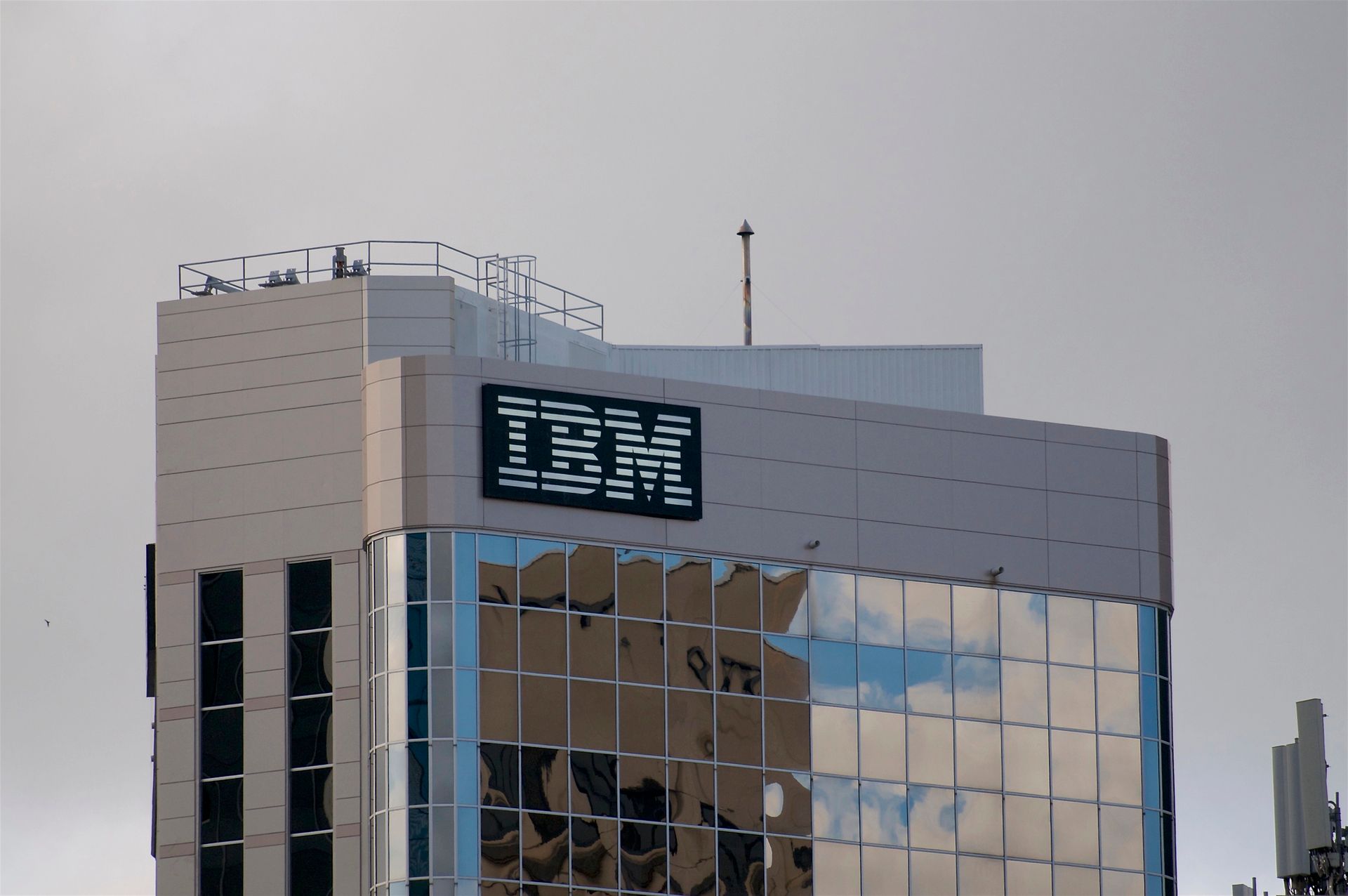
IBM (NYSE: IBM) is pushing deeper into workforce technology by teaming up with Pearson to build AI-powered learning systems designed for enterprises, governments, and institutions.
The focus is not on courses or videos, but on adaptive learning that reacts to how people actually work.
By embedding AI directly into training and upskilling flows, IBM is turning learning into an always-on system rather than a scheduled event.
From Static Training to Living Skill Maps
The partnership centers on AI orchestration and governance tools that personalize learning paths based on real job needs.
Skills gaps, career transitions, and workforce planning become data-driven problems instead of HR guesswork.
Enterprises gain visibility into what skills exist, which ones are missing, and how to close those gaps faster without disrupting operations.
When AI Agents Learn How Humans Learn
Beyond training humans, the collaboration explores tools that verify what AI agents can actually do.
That adds a trust layer as organizations deploy autonomous systems across workflows.
For IBM, this reinforces its push toward responsible AI that scales safely while staying auditable and enterprise-ready.
A New Backbone for the AI Workforce
The bigger play is infrastructure. IBM is positioning AI-powered learning as core enterprise plumbing, right alongside cloud, automation, and security.
As AI reshapes jobs faster than people can retrain, IBM is betting that learning technology becomes one of the most valuable systems inside modern organizations.
Poll: If your wallet could talk, what would it complain about most? |
Recent Tech Movers
Disney (NYSE: DIS)
Mickey Mouse Meets Sora
Disney is writing a billion-dollar check into OpenAI, and in return it’s turning Sora and ChatGPT Images into the world’s most expensive fan art machine.
Over 200 characters from Disney, Marvel, Pixar, and Star Wars will be fair game for AI-generated videos and images, with the mouse’s lawyers actually blessing the prompts instead of chasing them.
For Disney, this is IP defense and offense at the same time: lock down usage, get paid in equity and warrants, pipe OpenAI tools into internal workflows, and push curated Sora clips onto Disney+.
If it works, the magic kingdom quietly adds an AI revenue leg while still looking like the grown-up in the room on creator rights.
Broadcom (NASDAQ: AVGO)
The $21 Billion “Oh, It Was Anthropic” Reveal
That mystery customer who ordered $10 billion worth of custom AI chips? Turns out it’s Anthropic, and they just tacked on another $11 billion.
Broadcom is now shipping full racks of Google’s Ironwood TPUs to the AI lab, not just loose chips, making it a key plumbing supplier for one of the hottest model shops on the planet.
The bigger story is validation: custom XPUs and optical networking aren’t just slide-deck buzzwords, they’re landing multi-billion-dollar orders.
The catch is the multiple already bakes in a lot of AI perfection, so you want to see that fifth big custom-chip customer ramp quickly before you chase every pop.
Eli Lilly (NYSE: LLY)
Weight Loss That Rivals Surgery
Lilly’s next-gen obesity drug just put up eye-popping late-stage data: nearly 24% average weight loss across all patients and closer to 29% for those who stayed on the highest dose, plus big improvements in knee pain.
That’s edging into bariatric surgery territory in an injectable and solidifying Lilly’s lead in the $100-billion-by-2030s weight-loss market.
Side effects and dropouts are still a watch item, but the positioning here is clear: this is the heavy-duty option for patients with severe obesity and joint issues, not a casual summer cut drug.
For investors, it’s another pillar under a trillion-dollar pharma story that’s becoming more of an obesity platform than a traditional drug company.
Fresh Market Insights (Sponsored)

Here’s a free copy of our latest report: 7 Best Stocks for the Next 30 Days.
Our long-standing, data-driven system has consistently identified high-potential trades — helping investors capture exceptional gains over time.
This report highlights the 7 stocks with the strongest short-term potential.
Only a small fraction of stocks qualify, these could be your next portfolio movers.
Don’t miss out and download your free copy now.
[Access the Free Report]
The Legacy Software Giant Turning Into An AI Landlord
Oracle (NYSE: ORCL)
Why This Name Is Suddenly Loud Again
Oracle just told investors it’s cranking this year’s capex budget from $35 billion to $50 billion and layering on a staggering $248 billion in long-term leases to build AI data centers.
That’s a 148% jump in lease commitments in one quarter, aimed at serving cloud and AI customers like OpenAI, Meta, Nvidia, and others who want compute yesterday.
The twist is despite all that demand, revenue came in light and the stock promptly fell double digits.
You’ve got a company signing 15- to 19-year rent checks on data center space while the market asks, great, but where’s the near-term payoff?
Scorecard You Can Use
AI Demand Is Real: OpenAI alone has a multi-hundred-billion-dollar cloud commitment, with other hyperscaler-adjacent names lining up for capacity.
Leases Plus Capex: Between the $50B capex plan and those long-dated leases, Oracle is effectively pre-buying a massive share of future AI infrastructure.
Bring-Your-Own-Chips Option: Customers can roll in their own silicon, which helps Oracle fill racks without eating quite as much GPU cost itself.
Debt Stack Growing: New bond deals and higher total obligations (over $120B when you include lease liabilities) mean leverage is no longer a background detail.
Why The Market Cares
If this gambit works, Oracle becomes less of a legacy database and ERP vendor and more of an AI landlord: you bring the models, they provide the power, space, and networking at scale.
That could support a long runway of high-margin cloud revenue as AI agents, training runs, and inference all migrate onto its regions.
But markets don’t love trust me, the checks are huge stories when the current quarter misses on top line.
The selloff is the tug-of-war between enthusiasm for AI infrastructure and concern that Oracle’s balance sheet is doing too much heavy lifting, too fast.
What Could Spook It
Overbuilding The Future: If AI spending normalizes or shifts back toward rivals, those 15-year leases start to look like an anchor instead of a moat.
Funding Jitters: More debt raises or equity overhangs to pay for capex could pressure the stock if investors feel like they’re subsidizing the land grab.
Cloud Competition: Amazon, Microsoft, and Google won’t sit still—if they undercut on price or bundle AI services more tightly, Oracle’s share gains get harder.
What To Watch Next
Booked-Not-Billed AI Deals: Concrete dollar figures and logos behind those big commitments, not just vibes and partnerships.
Utilization Of New Capacity: Are those fresh data halls filling up quickly, or sitting half-empty while interest and lease costs tick?
Free Cash Flow vs. Capex: How much of the AI buildout is being funded by internal cash vs. the bond market.
Actionable Take
Builders: This may be one you build slowly on red days if you believe the AI data-center boom has years left. You’re betting that today’s ugly revenue miss is noise and tomorrow’s cloud invoices justify the capex binge.
Traders: Treat it like a volatility machine. Sharp dips on funding and debt headlines could be tradeable bounces, while any euphoric spike on new mega-contracts might be a place to trim.
Bottom Line:
Oracle is effectively buying a front-row seat to the AI infrastructure show with other people’s rent checks and its own balance sheet.
If the demand from OpenAI, Meta, and friends keeps compounding, the stock may eventually trade more like an AI landlord than a grumpy legacy software name, and this pullback could end up looking like the cover charge.
If not, those 19-year leases will feel a lot longer on the way down.
Everything Else
🎮 Fortnite is officially back on Google Play in the U.S., as a court order forces Google to let Epic’s battle royale through the front door again instead of the side-load fire escape.
🗳️ Washington is getting into the prompt-engineering business, planning to require AI vendors selling to the feds to measure political bias, so your tax dollars don’t accidentally underwrite a partisan chatbot.
🤖 OpenAI just rolled out GPT-5.2, promising sharper reasoning and faster responses so your AI coworker can say “it depends” with even more nuance.
🚀 Elon Musk says a report of a 2026 SpaceX IPO is on target, giving investors fresh fuel to daydream about owning a slice of the rocket factory instead of just tweeting about it.
🚗 Rivian used its latest Autonomy AI Day to pitch a future where your electric truck is part pickup, part software platform, and part self-driving robot that still hauls mulch on weekends.
That's our coverage for today; thanks for reading! Reply to this email with feedback or any tech stocks you want me to check out.
Best Regards,
—Noah Zelvis
Tech Stock Insider