- Tech Stock Insider
- Posts
- Cars Need Brains, Factories Need Nerves, And This Chipmaker Sells Both
Cars Need Brains, Factories Need Nerves, And This Chipmaker Sells Both

Noah Zelvis
March 15, 2026
Not every semiconductor winner needs to be the loudest name in AI. Some of the best ones sit deeper in the stack, selling the chips that help factories sense, cars react, and power systems stay stable.
That is the appeal here. This is a semiconductor company with real cyclical exposure, but also the kind of margin profile and end-market mix that can make a recovery look a lot more durable than usual.

State Rules (Sponsored)

Most Americans missed this big story, but 1 in 5 states have now made gold and silver coins legal tender.
It's just one reason why so many predict gold will soon hit $10,000. And why you need to check out this strategy for gold (less than $50 to get started) immediately.
Click here for the full details.
What Just Happened
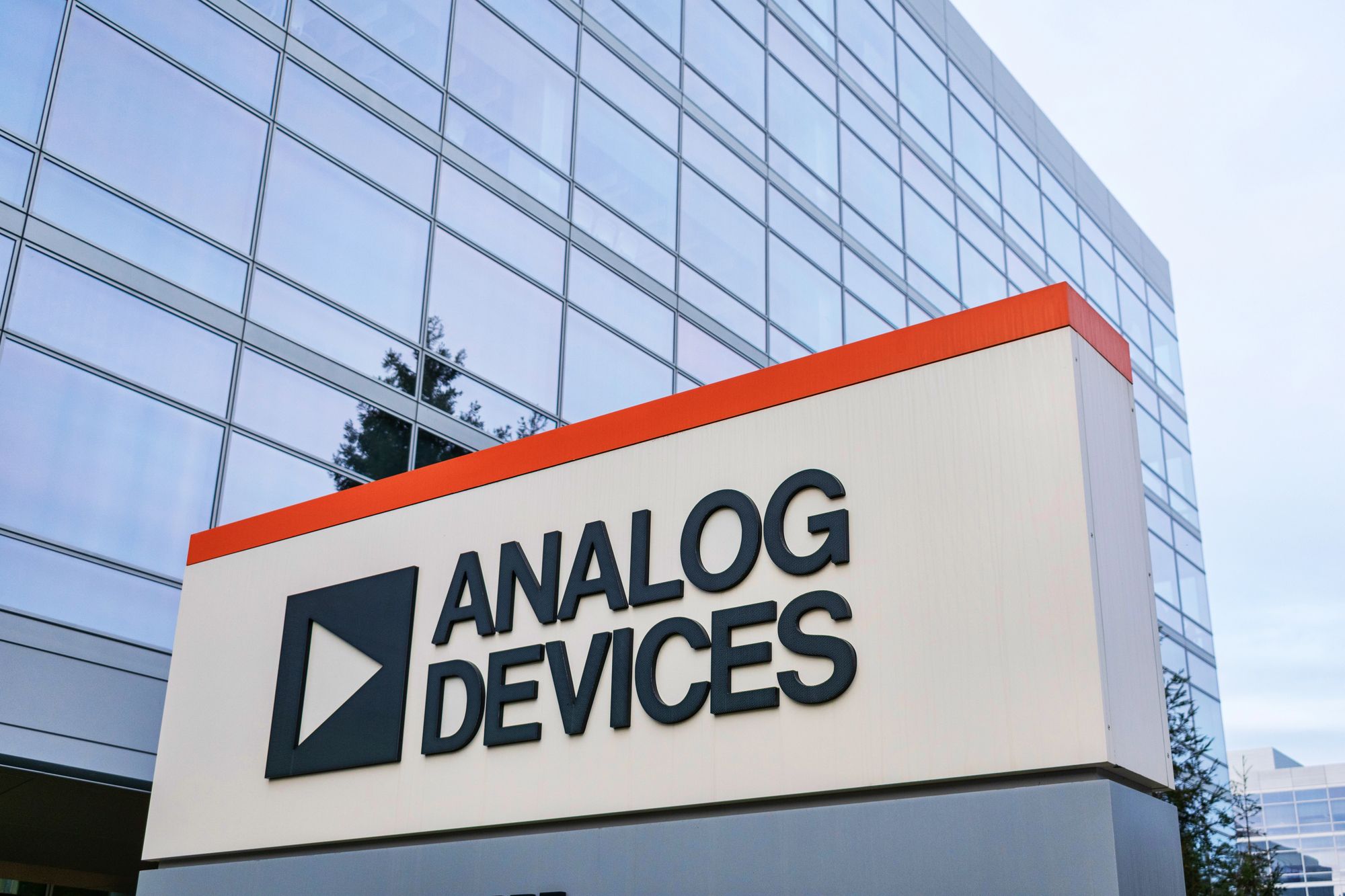
Analog Devices (NASDAQ: ADI) just delivered the kind of quarter that makes investors stop treating it like a sleepy analog name and start treating it like a premium-quality compounder again.
In fiscal Q1 2026, ADI reported $3.16 billion in revenue and guided fiscal Q2 revenue to $3.5 billion, plus or minus $100 million, both ahead of expectations. It also guided adjusted EPS to $2.88, plus or minus $0.15, above Wall Street estimates. Management pointed to strong demand from industrial and data center customers, while the company also said it saw year-over-year growth across all end markets.
The stock response made sense. Needham upgraded ADI to Buy after the print and set a $400 price target, arguing that the improving operating results no longer justified staying on the sidelines. Other firms also moved targets higher after the quarter.
Never Miss Our Top Tech Recommendations Again!
We now send our tech picks via text, too, so you’ll get the same tech breakout news without having to open your inbox.
The Unsexy Chips That Make Machines Smarter
Analog Devices sells analog, mixed-signal, and power chips. In plain English, these are the semiconductors that help physical systems sense the world, convert real-world signals into usable data, manage power, and make precise decisions.
That matters because modern industrial and automotive systems are packed with “real world” complexity. A robot arm needs sensing and control. A driver-assist system needs signal integrity and power management. A factory test system needs precision. A data center power rack needs monitoring and optimization. ADI sits inside those kinds of systems, which makes it less dependent on one single product cycle than a pure consumer chip name.
Hidden Income (Sponsored)

His salary is $400,000 a year.
But his tax returns show he collects up to $250,000 a MONTH from one source.
It's not real estate.
It's not stocks.
Discover what it is... And how you can get in for less than $20
Trivia: What film franchise famously made George Lucas a billionaire largely because he kept the merchandising rights? |
Why The Market Cares Again
The comeback here is being driven by a few overlapping forces.
Industrial is recovering with quality.
ADI’s industrial business, its largest segment, grew 38% year over year in fiscal Q1 2026. That is not just a bounce. It suggests customers are spending again in areas like factory automation, energy, and test equipment.
Automotive is participating too.
The automotive segment grew 8% year over year in the quarter, which is not explosive, but it matters because it shows that recovery is broadening rather than sitting in one pocket.
Data center demand is adding an AI tailwind.
Reuters reported that ADI’s strong Q2 outlook was driven in part by robust demand from industrial and data center customers as AI infrastructure spending keeps rising. That helps the story because it adds a secular growth leg on top of the normal analog cycle.
Mounting Pressure (Sponsored)

Big Oil may be facing its biggest challenge yet.
A breakthrough tied to an MIT-trained scientist could unlock a fuel source that’s virtually unlimited.
According to the U.S. Department of Energy, it could last billions of years.
Once operational, the fuel itself costs nothing.
That’s why this story matters now.
Get the full details here.
What The Financials Are Signaling
The most important signal is that margins are staying elite even as growth accelerates.
ADI’s fiscal Q1 2026 gross margin was 71.2% and operating margin was 45.5%, both up from the prior quarter and the prior year. Those are exceptionally strong numbers for a company serving cyclical end markets, and they are a big reason investors are willing to give the stock a premium multiple.
The company is also still acting like a shareholder-friendly compounder. It raised its quarterly dividend by 11% to $1.10, marking 22 consecutive years of dividend increases, and said it returned $1.0 billion to shareholders through dividends and buybacks in the quarter.
That combination is powerful: better growth, still-great margins, and enough confidence in cash flow to keep increasing capital returns
The Real Bull Case Is Quality Through The Cycle
A lot of semi names look cheap at the bottom and expensive at the top. ADI tends to look expensive more often because the market trusts the business model more than the average chip company.
That trust comes from a few things:
diversified industrial and automotive exposure
strong content per system in mission-critical applications
sticky customer relationships
unusually strong gross and operating margins
If you believe factory automation, electrification, data center power, and automotive electronics are still multi-year tailwinds, then ADI looks less like a trade and more like a high-quality toll collector inside those systems.
The Valuation Problem No One Should Ignore
There is a catch: this is not a cheap stock.
Based on the numbers you shared, ADI is trading around 58x earnings, and several writeups have also noted that the stock screens as expensive on near-term metrics after the rally. Needham’s new target assumes a richer forward multiple because analysts expect earnings power to keep rising into calendar 2027.
That means you are not buying a forgotten turnaround. You are buying a premium analog franchise after the market has already noticed the recovery.
So the question is not whether the business is good. It appears very good. The question is whether the current price already discounts a lot of the next leg.
What Needs To Happen Next
For ADI to keep working from here, I would watch a few things:
Industrial demand needs to stay healthy.
That segment is the core of the story, so continued strength there matters most.
Automotive needs to keep improving.
It does not need to explode, but a steady recovery helps support the “broadening cycle” narrative.
Data center momentum needs to stay additive.
If AI infrastructure demand keeps supporting communications and power-related products, it can help smooth out the normal cyclicality.
Margins need to remain elite.
The premium multiple is easier to justify when gross margins stay above 70% and operating margins stay in the mid-40s.
The Risks You Should Take Seriously
This is a very good business, but not a free lunch.
Valuation risk: premium stocks can get hit hard if guidance merely turns “fine” instead of great
Cycle risk: industrial and auto are still cyclical end markets
Competition risk: Texas Instruments, NXP, and STMicro are not exactly asleep
Narrative risk: if AI-linked data center demand cools, some of the recent enthusiasm could come out of the story
How I’d Frame A Position
I would treat ADI like a high-quality semi compounder, not a bargain-bin cyclical.
If you already own it, the story still looks healthy: strong demand, strong margins, strong capital returns. If you are new, I would probably think more in terms of scaling in on pullbacks than chasing after a big run, because the valuation leaves less room for disappointment.
The core thesis is not just that industrial and auto recover. It is that this company keeps converting that recovery into unusually good margins and cash flow.
Bottom Line
Analog Devices is reminding the market why premium analog franchises get premium multiples. Industrial and automotive are improving, data center demand is adding another tailwind, and the company is protecting margins at a level most semiconductor peers would love to have.
The trade-off is price. ADI is no longer cheap, and the market is already rewarding the recovery. But if the company keeps delivering this mix of growth, margins, and capital discipline, the premium may keep making sense.
Action Recap
✅ What’s working: Industrial, communications, consumer, and automotive all grew year over year in Q1, while margins stayed elite.
✅ What to watch: Follow-through in industrial and automotive, plus continued AI/data center support.
⚠️ Big risk: Valuation compression if demand normalizes faster than expected.
🧭 Best mindset: Premium analog compounder, best bought with discipline rather than excitement.
That's our coverage for today; thanks for reading! Reply to this email with feedback or any tech stocks you want me to check out.
Best Regards,
—Noah Zelvis
Tech Stock Insider